
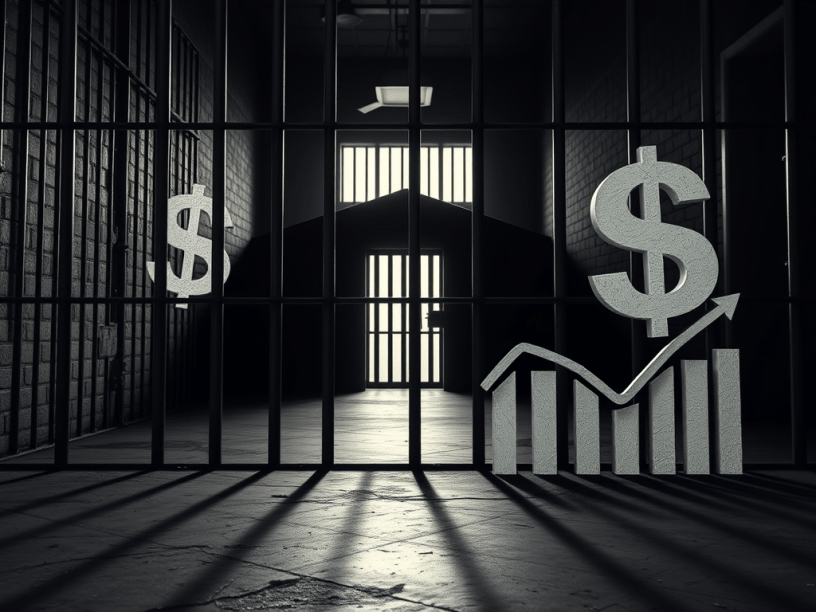
How Mass Incarceration Became a Business Model
There’s no problem in America that some suit-wearing sociopath hasn’t figured out how to monetize, and locking people in cages is no exception. You could argue that mass incarceration is this country’s most reliable industry—steadier than oil, more innovative than tech, and just as cruel as health insurance. The U.S. holds the dubious honor of locking up more people per capita than any other nation on Earth. More than Russia. More than China. More than North Korea, for Christ’s sake. Land of the free, indeed.
A Nation of Prison Guards and Prisoners
The numbers alone are staggering. With around two million people behind bars, America has transformed into a nation where every third person is either incarcerated, on parole, or making a fortune off the system that keeps them there. We’ve got more prison facilities than some countries have Starbucks. If you’re Black or Latino, congratulations: statistically, you have a better chance of getting arrested than getting a mortgage. And if you’re rich and white? Well, the only time you’ll see the inside of a jail cell is in a Hollywood movie where you play the good kind of criminal—the charming, misunderstood stock trader who just needed a second chance.
The War on Drugs: Greatest Scam Ever Pulled
How did we get here? Well, let’s start with the great American pastime of inventing moral panics. Back in the ‘80s and ‘90s, our political overlords needed a new boogeyman, so they landed on drugs—specifically, the ones used by poor people. The result? Sentencing laws so deranged that a Wall Street exec could get caught laundering billions and serve less time than some guy who sold an ounce of weed. Cocaine was fine if you were snorting it off a yacht in Miami, but if you had crack in your pocket in Compton, congratulations, you just won 25-to-life.
Then there was the 1994 Crime Bill, the brainchild of ‘tough-on-crime’ fever dreams. It was like an all-you-can-eat buffet for the prison industrial complex: mandatory minimums, three-strikes laws, and so many new prisons built that America started to look like one big penal colony. The best part? Both Republicans and Democrats gleefully signed off on it, proving once again that bipartisanship only happens when everyone agrees to screw over the poor.
Private Prisons: Where Human Misery is a Profit Margin
Now, you might think mass incarceration is just an unfortunate consequence of bad policy. Wrong. It’s a business model—one that’s working exactly as intended. Private prisons are raking in billions because nothing says ‘land of opportunity’ like turning human beings into revenue streams. Corporations literally sign contracts guaranteeing a minimum number of prisoners, which means that if crime ever goes down, they have a problem. You don’t need a PhD in criminology to guess what happens next: more laws, harsher sentencing, and enough petty arrests to keep the money machine running at full speed.
And just in case the standard prisons weren’t making enough cash, the U.S. also pioneered the charming concept of prison labor. That’s right—modern slavery, dressed up as ‘rehabilitation.’ For-profit companies exploit inmates to make everything from military gear to Whole Foods tote bags, all while paying them a few cents an hour. Which, incidentally, isn’t enough to buy the toothpaste sold at the prison commissary.
The Cops, the Judges, and the Gravy Train
Of course, none of this works without law enforcement doing their part. Police departments have been militarized to the point where they look like they’re invading a small country every time they serve a warrant. Civil asset forfeiture laws let them straight-up steal from people without even charging them with a crime, and they’ve been known to prioritize easy arrests over actual crime prevention because, well, who needs justice when you’ve got quotas to meet?
Judges, for their part, act like bureaucratic rubber stamps for the whole operation. There are literal cases of judges taking kickbacks from private prisons in exchange for throwing more kids in juvie. Some of them probably don’t even realize what they’re doing because they’ve been sentencing people like they’re working the checkout line at a Walmart for decades.
The Way Out (If Anyone Actually Cared)
So how do we fix it? Well, step one would be stop treating incarceration like a goddamn stock option. End private prisons, stop using inmates as slave labor, and overhaul the entire sentencing system so people aren’t doing decades for nonviolent offenses. But that would require politicians to go against the interests of the corporations funding their campaigns, so don’t hold your breath.
And while we’re at it, how about we stop treating poor people like crime statistics waiting to happen? Maybe, just maybe, if we invested in schools, mental health care, and social programs instead of police tanks, we wouldn’t need to keep stuffing human beings into cages to balance the GDP. But again, that would involve using common sense, which—let’s face it—is not America’s strong suit.
Final Verdict
At the end of the day, mass incarceration isn’t a failure of the system—it is the system. And it’s working exactly as designed: to keep the rich rich, the poor locked up, and the whole damn country running on fear and punishment. Until people start demanding better, expect more of the same: more prisons, more suffering, and more smug politicians pretending to be ‘tough on crime’ while cashing checks from the companies that make money off the misery.
America, the loathsome.
 The American Beast