
Part 6: Gilded Age Glitz and the Sweatshop Blues (Late 1800s)
The Civil War’s smoke barely clears by the late 1860s, and America immediately shifts gears—from musket smoke to coal smoke, from battlefield gore to financial bloodsport. Mark Twain nails it with his “Gilded Age” quip, branding the late 1800s a thin veneer of gold slapped over rampant rot. Railroads unfurl like iron tentacles across the continent, belching progress and profits, converting quiet towns into industrial infernos practically overnight. By 1900, the U.S. churns out more steel than Britain and Germany combined—a brash economic flex that screams dominance. Population? Exploding. Twelve million immigrants flood in between 1870 and 1900, chasing dreams promised in pamphlets but finding mostly urban hellscapes instead.
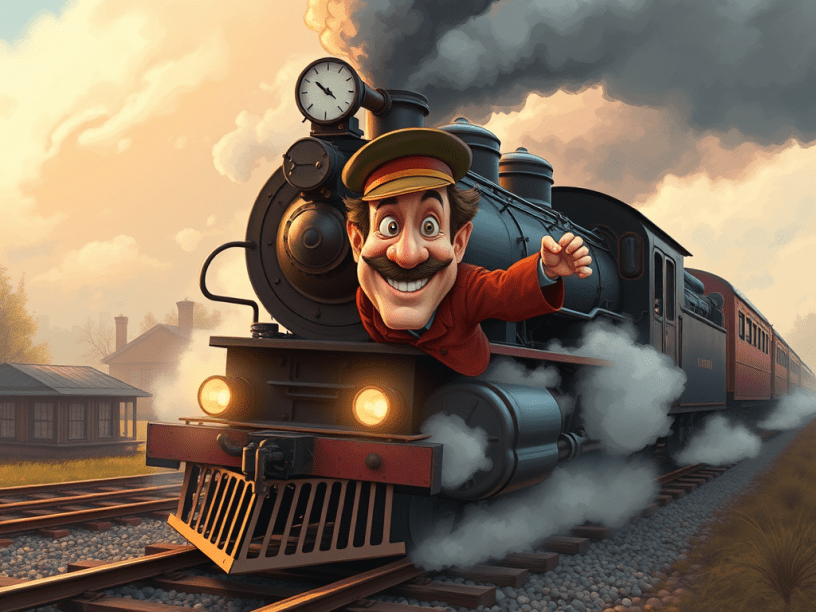
Railroads are the era’s steroidal heart, connecting coasts in 1869 with the Transcontinental Railroad at Promontory Point—a golden spike hammered amid patriotic fanfare, while nobody bothers mentioning the taxpayer-funded giveaways (30 million acres by 1871) quietly handed to rail barons like Cornelius Vanderbilt. This steam-powered thug transforms from ferry tycoon to railway czar, swallowing smaller lines and crushing rivals with a capitalist zeal that would make today’s oligarchs blush. And those tracks? They bulldoze right through Native lands—Cheyenne, Lakota, Apache—turning treaties into historical toilet paper. Buffalo herds drop from 30 million to a handful, casually exterminated by bored passengers on moving trains.
This railway racket sets off an industrial explosion that births American royalty—robber barons who masquerade as heroes. Take Andrew Carnegie, the Scottish-born steel king whose mills spit out beams like fire-breathing dragons, turning Pittsburgh into a smoky hellscape while Carnegie himself bathes in cash. Workers endure 12-hour shifts for starvation wages, dodging molten metal in factories more furnace than workplace. Meanwhile, John D. Rockefeller masters another racket: oil. By 1880, Standard Oil grips 90% of refining, choking competitors into submission with ruthless pricing and backroom deals. Carnegie and Rockefeller build castles and mansions, flaunting wealth so obscene the Census Bureau’s 1890 stats read like satire: 9% of Americans holding 71% of the wealth. It’s astonishing the masses didn’t just torch the estates; instead, they kept scrambling for scraps.
Urban America becomes a dystopian nightmare: New York’s Lower East Side packs humans tighter than livestock—330,000 souls per square mile by 1890—living amid disease and desperation, with sunlight as rare as hope. Industrial accidents like the Triangle Shirtwaist Factory fire of 1911, killing 146 locked-in workers, barely make bosses pause their profit count. Labor tries pushing back—the Knights of Labor swell to 700,000 demanding basic human decency—but the bosses counterpunch viciously. Haymarket in 1886 ends in bombs, blood, and hangings; Carnegie’s Homestead Strike in 1892 sees Pinkertons gunning down steelworkers. The Sherman Antitrust Act, meant to curb monopolies, is cynically twisted into a cudgel against unions while Congress nods approvingly from the sidelines.
The West isn’t salvation—just exploitation with a scenic backdrop. The Dawes Act of 1887 carves up tribal lands, handing natives 160-acre parcels while whites eagerly snatch the rest, shrinking reservations by two-thirds. The Sioux, practicing a ghost dance of desperation, are massacred at Wounded Knee in 1890—300 dead, mostly women and children—because superstition and paranoia fueled a slaughter. Gold rushes—Black Hills, Klondike—promise riches but deliver death, mainly for natives whose bones litter the plains. The 1890 Census politely calls the frontier “closed,” essentially confirming America’s complete obliteration of the wild.
Back East, populist rage brews but fizzles out. William Jennings Bryan’s fiery “Cross of Gold” speech in 1896 rails against banks and gold standards, but corporate interests prove unbeatable. Farmers drown in debt while Chicago’s 1893 World’s Fair dazzles with electric lights and Ferris wheels, providing a shiny distraction from the starving crowds outside.
This isn’t the rosy “industrial triumph” your history teacher told you about—it’s capitalism’s naked brutality, dripping wealth from sweat-soaked hands of the exploited. Carnegie’s libraries and Rockefeller’s philanthropy are whitewashed symbols of exploitation, offering token gestures to the masses they stepped on. The Gilded Age isn’t America’s shining moment; it’s proof the country could spin greed into virtue, building wealth atop broken backs and shattered lives, smiling as it serves bitter injustice wrapped in golden foil.
 The American Beast