
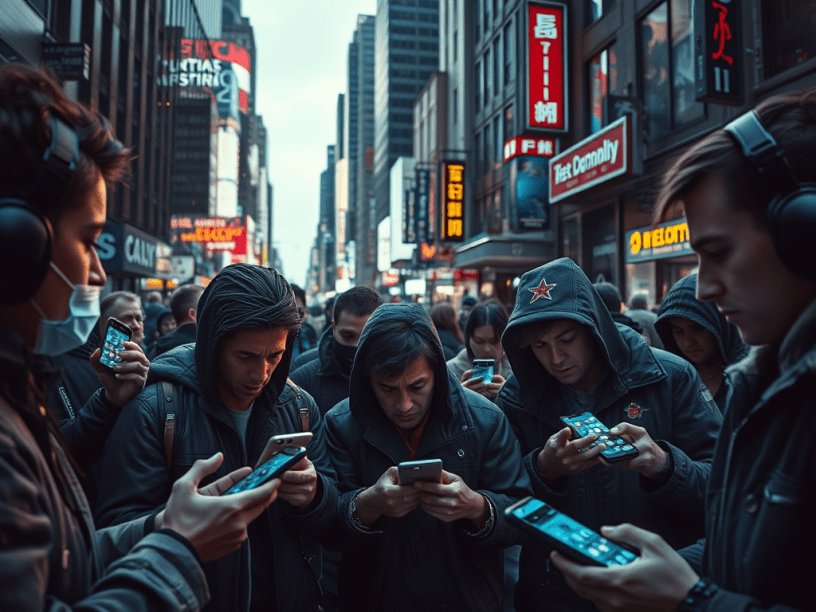
Picture this: you’re trying to get a doctor’s appointment, but your HMO’s app crashes halfway through scheduling. You’re locked out of your apartment because the “smart” lock’s firmware update bricked it. Your city’s 311 hotline redirects you to a chatbot that spits out canned responses while raw sewage backs up in your street. Health care, housing, education, government, love, lunch—doesn’t matter. If it requires a pulse or a shred of empathy, it’s now outsourced to a glitchy app run by a 24-year-old in a Patagonia vest whose life experience peaks at a WeWork lease and a podcast about microdosing. This isn’t progress. It’s a digital reshaping of reality, a slow-motion collapse of a nation into a dystopian beta test where citizens are reduced to “users,” trapped in a feedback loop of corporate surveillance, algorithmic nudges, and error codes that scream “you’re on your own.” America didn’t fall to tanks or tyrants—it got gentrified by the App Store.
The Great Handover: From Humans to Hoodies
Time was, America ran on institutions—creaky, corrupt, but at least staffed by people who’d seen a recession or a funeral. City halls, hospitals, schools, even the DMV had humans making calls, however badly. Now? We’ve pawned it all to venture-backed startups and their armies of hoodie-clad coders who think “disrupting” reality is as easy as cloning Uber for dog-walking. Health care? Try MyMediCarePro360™, where you wrestle 17 error screens to book a telehealth slot, only to learn your insurance “isn’t supported at this time.” Housing? Zillow and Redfin serve up fake listings and inflated prices, snatched up by venture-backed LLCs like “HOMEBOT.XYZ” that turn homes into Airbnb gulags with surge pricing and Ring cams pointed at your pillow. Public services? Cities like Chicago and San Francisco have outsourced 311 to AI chatbots that can’t tell a pothole from a sinkhole but will upsell you a “premium” complaint tier.
The numbers are as grim as the user experience. A 2023 study from the Pew Research Center found 62% of Americans had encountered a “significant issue” with a digital service platform in the past year—crashed apps, wrong prescriptions, botched utility payments. Health care’s a standout disaster: telehealth apps, which handled 40% of primary care visits by 2024, have error rates as high as 25% for misdiagnoses, per a JAMA study. Housing’s no better. Redfin and Zillow’s algorithms have inflated home prices by prioritizing cash buyers and institutional landlords, with median home costs up 50% since 2019. Even dating’s a nightmare—70% of Tinder and Bumble users report “fatigue” from endless swiping, ghosting, and profiles curated by bots to keep you hooked, not matched.
This isn’t a bug; it’s the blueprint. Startups don’t fix problems—they gamify them, turning every need into a subscription or a dopamine slot machine. Their coders? Not exactly Solomons. A 2024 LinkedIn analysis pegs the median age of software engineers at top startups at 27, fresh from coding bootcamps or Stanford’s CS mill, with zero clue about taxes, grief, or anything that can’t be A/B tested. These are the oracles of your life now—kids who’ve never balanced a checkbook, or faced a moral dilemma, deciding how you access medicine, shelter, or a date.
The User Trap: From Citizens to Serfs
The fallout is a zombified nation of “users”—not people, but data points in a server farm. You’re not a patient; you’re a profile on Epic’s EHR, your ailments cross-referenced with Big Pharma ad targeting. You’re not a tenant; you’re a risk score on RentSpree, dinged for tweeting about rent strikes. Even your doctor’s staring at an app, which flags you as pre-diabetic, possibly schizophrenic, and not worth six minutes unless your chart can be billed in triplicate. Health care isn’t about healing—it’s about clicking the right toggles in Cerner so the hospital’s billing bot doesn’t scream “unbillable meat.”
Customer service? Extinct. Want a human on the phone? Tough luck, bitch—humans are overhead, and overhead tanks your burn rate. Instead, you’re screaming into a chatbot trained on Reddit rants and the suicide notes of ex-UX designers. File taxes? Congrats, you’re TurboTax’s unpaid intern. Groceries? Pray the Instacart’s shopper doesn’t substitute your avocado with a sausage link. Travel? Rebook your own canceled flight on United’s app, because the only employee left is the guy restocking Biscoff cookies. Industries haven’t just automated—they’ve offloaded their entire job description onto you, then gaslit you with a smiley emoji.
The surveillance is suffocating. A 2024 Electronic Frontier Foundation report found 85% of mobile apps hoover up “excessive” data—location, biometrics, keystrokes—often without consent. Health apps like Flo sell your fertility data to insurers. “Smart” cities like Toronto’s Sidewalk Labs pilots turn streets into panopticons, with sensors tracking your gait for corporate “optimization.” Your Fitbit snitches to your boss’s wellness program. Your Ring doorbell feeds footage to cops via Amazon’s backchannels. Privacy’s not dead—it’s been flayed and sold for parts.
And the glitches? They’re not accidents; they’re body counts. In 2023, a UnitedHealthcare app bug denied coverage to 10,000 patients for misflagged “pre-existing conditions”—some were kids with asthma. In 2024, a DoorDash algorithm misrouted $2 million in orders, stiffing drivers and starving customers. Voting’s dicey too: Dominion’s touchscreens, used in 30 states, have 3% error rates in high-turnout elections, per a 2022 MIT study. When an insulin pump app crashes mid-dose, that’s not a “whoops”—it’s a funeral.
Government as a Glitchy App Store
Government? It’s a subscription service with in-app purchases and mandatory biometric login. Renew your license? The DMV’s app crashes, deletes your account, and flags you as an identity thief for using Firefox. Unemployment? Navigate a 1997-era website with broken JavaScript, then download a “companion app” built by someone who thought UI was a French cheese. After 14 hours of swearing, you’ll get $38 and a warning not to try again. Immigration, food stamps, student loan forgiveness? All run on software so bad it makes Healthcare.gov look like a Swiss watch—coded by the same consultancies now rebranding as “ethical AI” while churning out digital landfills.
The future of governance is a Slack thread between five ex-Google interns, a contract PM on Adderall, and a chatbot named Brenda who keeps chirping “Oops! Something went wrong.” No one knows what anything costs, how it works, or who’s in charge. Your life’s a black-box algorithm prioritizing ad revenue over your heartbeat. You’re not a citizen—you’re a user, clicking, swiping, and scrolling until your dopamine’s spent and your bank account’s a husk.
The Dopamine Casino: Strip-Mining Your Soul
Why do we put up with it? Because Silicon Valley’s cracked the code on addiction. Every app, from Uber to Instagram, is a digital slot machine, engineered to keep you tapping through a haze of notifications, streaks, and “personalized” nudges. A 2024 study in Nature found that Americans spend an average of 7 hours a day on apps, with dopamine-driven platforms like TikTok and X rewiring attention spans to sub-goldfish levels. The psychological toll is brutal: 40% of Gen Z reports “digital overload” linked to anxiety and depression, per a Kaiser Family Foundation survey. Yet we keep swiping, because the alternative—logging off—feels like quitting oxygen.
The tech bros know this. Their pitch decks brag about “stickiness,” not solutions. Take Robinhood, the trading app that gamified the stock market for millennials, luring them with confetti animations and “free” trades—until a 2021 glitch wiped out $500 million in user portfolios. Or consider mental health apps like BetterHelp, which promise therapy but often match you with unlicensed “coaches” while selling your trauma to data brokers. These aren’t tools; they’re traps, designed to extract your time, money, and sanity while delivering the bare minimum to keep you hooked
The profits are obscene. In 2024, the top 10 tech firms pulled $2.1 trillion in revenue—more than most countries’ GDPs—while America’s bridges collapse and Food Stamp subsidies get cut. Schools limp along on 1990s budgets, but EdTech apps like ClassDojo monetize kids’ behavior data. Health care costs have doubled since 2000, yet hospitals lean on apps that 404 when you need a bed. Meanwhile, the coders live in a bubble—Montessori for their kids, house-call docs for them, New Zealand bunkers for the apocalypse—while we beta-test their dystopia.
The Lords of the Digital Manor
Who’s cashing in? The venture capitalists—lizard-eyed reapers who fund a thousand parasitic apps hoping one becomes the next unicorn. They’re not here to improve your life; they’re here to privatize the commons. Libraries? Now Amazon Prime “reading experiences.” Public transit? Swapped for e-scooters that explode if you sneeze. Schools? Rebranded as “learning hubs” with tablets, not teachers, and a $49 monthly fee. Their dream isn’t solutions—it’s monetizing your misery. The ideal user’s got five overdraft fees, six dating apps, a failing marriage, a neurotic dog, and a wearable tracking their mental decline for hedge-fund resale.
The app generation’s given us infinite convenience, infinite distraction, and infinite impotence. You can get a sandwich in 12 minutes but can’t read a paragraph without checking your phone. You can FaceTime Belgium but panic when the doorbell rings. Want to start a business? There’s an app. Get married? App. Have a kid? Try fertility NFTs. Die with dignity? Sorry, your hospice got bought by Elon, and now you’re livestreaming your exit on X Premium.
The Endgame: A Civilization on Autopilot
Here’s the real horror: Planet of the Apps is deskilling us into oblivion. When algorithms make every call, we forget how to think. Doctors defer to AI diagnostics, even when they’re bunk. Teachers lean on grading apps that miss creativity. Voters get news from X’s rage-bait firehose. We’re not users—we’re passengers in a driverless car speeding toward a cliff, dashboard flashing “Update Required.” Apps haven’t made us smarter—just faster at dumber things. We’ve built a world where no one can cook rice without Googling it, and everyone’s under surveillance, manipulated, and one push notification from a breakdown.
There’s no opting out. Ditch the apps, and you cease to exist. Try paying your “pizzza” without Venmo. Try dating without Tinder. Try freelancing without a dozen productivity apps and a crypto wallet you forgot the password to. The technocracy’s here—not jackboots or black helicopters, but a 2 a.m. alert that your social credit score dropped because you posted an unfiltered burger pic.
The Escape Hatch: Smash the Machine
So what’s the play? First, wake up. Delete the apps that don’t deliver—your brain will thank you. Demand transparency: every app should list what data it grabs and who gets it. Push for regulation—antitrust to gut Big Tech, privacy laws with claws, bans on selling health or fertility data. Fund public alternatives: hospitals, not telehealth scams; housing, not proptech cartels; 311 hotlines with humans, not bots. And talk to people IRL—no algorithm can touch a real conversation.
It’s an uphill fight. Silicon Valley’s got more lobbyists than Congress has seats, and they own the narrative. But the cracks are showing—X users rage about algorithm censorship, Reddit’s a horror show of app-driven nightmares, and even the tech bros are sweating, pivoting to “AI ethics” panels that are just PR for the next grift.
America’s on life support, hooked to a buggy app draining its soul. Planet of the Apps isn’t sci-fi—it’s our reality, coded by cowards, managed by kids, and controlled by algorithms that don’t get context, humor, or mercy. The next revolution won’t be televised—it’ll be flagged as “inappropriate” and scrubbed from your feed. So log off. Look up. Grab a pitchfork. The real world’s still out there—barely.
 The American Beast