
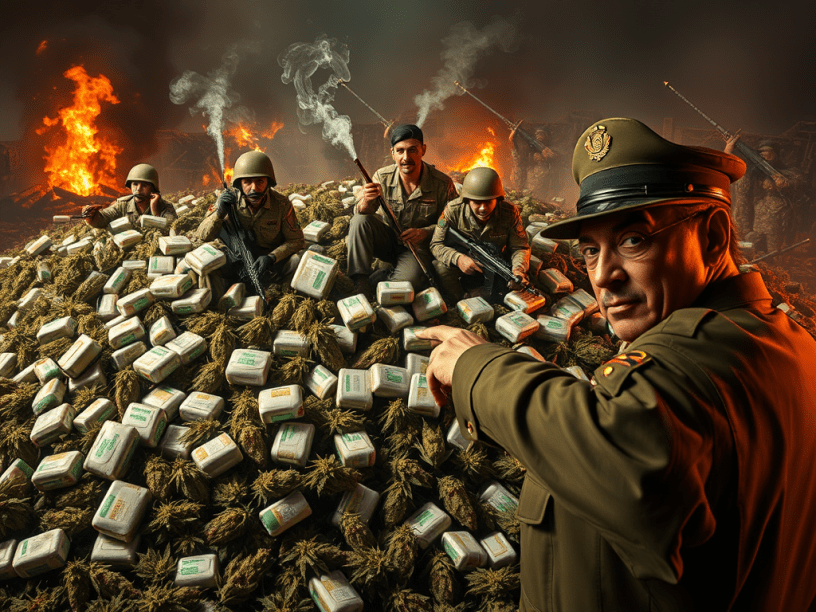
In a plot twist that reads like a fever dream penned by Sun Tzu on amphetamines, President Donald Trump has—wait for it—secretly ordered the U.S. military to prepare for action against Latin American drug cartels now labeled “foreign terrorist organizations.” Cue the headline: America’s armed forces might target cartels—on land, at sea, maybe even in exotic locales Mexico hasn’t yet built beachfront resorts on. Meanwhile, Mexican President Claudia Sheinbaum flatly rejected the notion of U.S. boots on her soil.
In February 2025, Trump’s administration officially splashed the “terrorist” label on six Mexican cartels—including Sinaloa, Jalisco New Generation, Gulf, and others—plus groups in Venezuela and El Salvador. Suddenly, drug trafficking wasn’t just law enforcement; it was a national security crisis demanding “all tools,” from guns to drones to digital sabotage.
Fast-forward: Trump signs a classified directive instructing the Pentagon to cook up military playbooks targeting these groups. Expect drone strikes, naval raids, maybe a sprinkle of special forces action abroad. The only problem? U.S. law doesn’t clearly authorize war in foreign countries without Congress. So this smells straight out of executive-lawlessness territory.
Mexico: Nope, Not That Kind of Collaboration
Mexico’s response was swift, sovereign, savage—in short, badass:
“There will be no invasion. Absolutely ruled out.”
“We cooperate, we collaborate—but only within our borders.”
She added that her government was informed of the order, but it applies strictly to U.S. territory. Trump may see cartels as cross-border terrorists; Mexico responsibly sees this as yet another threat to its hard-won sovereignty.
Let’s pause. The U.S., once the global sheriff, has always wrestled with its southern neighbor for influence—sending troops, dictating policy, occasionally firing missiles for show. This isn’t new. What’s new is doing it under the rubric of “terrorism.”
That opens a grotesque Pandora’s box: military action disguised as anti-cartel policy, no congressional approval, undercutting diplomatic norms, and crossing the red line of sovereignty like a dude in cargo shorts strolling through someone else’s backyard.
Is This Militarized ‘Drug War’ Even Practical?
Cartels aren’t armies with generals you can target. They’re fraying networks, deeply embedded—not just in geography, but in economies. Smashing them militarily risks creating chaos, not solutions.
Mexican security analysts say it’s potentially a diplomatic disaster that could spike tensions, destroy trust, and hollow out bilateral cooperation. Sheinbaum’s firm stance offers one shield—if it holds.
Democrats like Senator Tim Kaine are warning the legal ground is shaky, and international lawyers are already asking, “Dude, do you even need approval for this?” Congress hasn’t seen the bill. International law looks uncomfortably absent. Meanwhile, Trump waves the cartels-as-terrorists banner like a wrestler raising the title belt.
Trump’s move is classic fantasy reboot: “Cartels are terrorists!” “Let’s bring guns to the party!” Meanwhile, Mexico says, “Nope, pass.” The staging is already toxic—a near-miss invasion, a political grenade tossed in Mexico City, a diplomatic grenade in D.C.
If America’s foreign policy was ever a flag-waving Pride parade, this is now the sequined, grenade-filled float trolling sovereignty and due process. And the morning-after hangover? A possible collapse of everything from next-door collaboration to trade negotiations—all because diplomacy got replaced by directive.
Hold onto your sombreros and legal codes, folks. This story isn’t over—it’s just accelerating toward absolute absurdity.
 The American Beast