
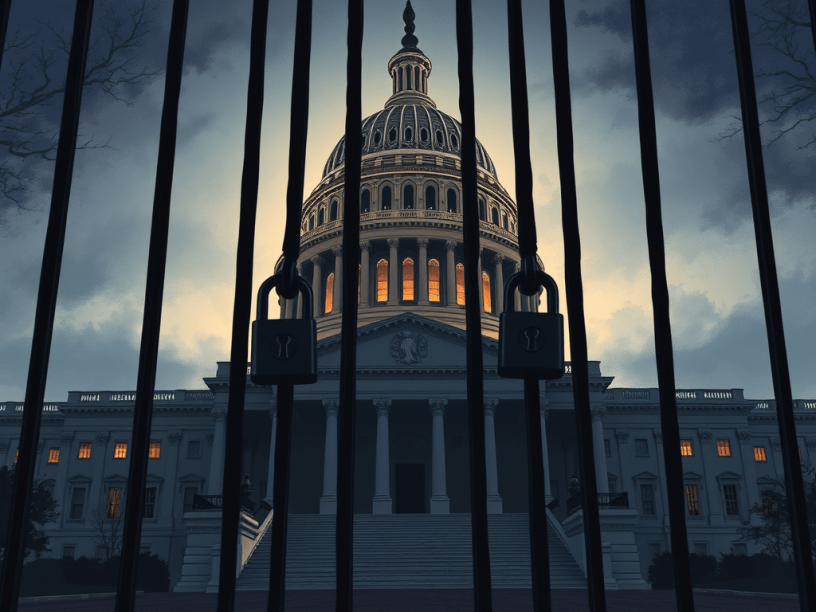
What the hell just happened?
On October 1, at the stroke of midnight, the federal government shut down because Congress—those extremely well-paid professional adults—failed to pass a budget for the new fiscal year. Republicans pitched a funding bill that didn’t extend enhanced Affordable Care Act subsidies, Democrats in the Senate said “nope,” and they did that 14 freaking times.
The core fight:
- Senate Democrats wanted to keep beefed-up ACA premium subsidies from expiring (the ones that make health insurance remotely affordable for millions).
- Trump and House Republicans wanted a “clean” funding bill without those subsidies and with cuts from their prior “One Big Beautiful Bill” austerity carnival baked in.
So they did what Washington always does when it hits a policy disagreement: instead of resolving it like grown-ups, they set the house on fire and argued over who owns the match.
The shutdown dragged on 43 days, the longest in U.S. history, eclipsing the 2018–2019 Trump wall tantrum. Around 900,000 federal employees were furloughed, roughly 2 million more were forced to work without pay, and huge chunks of the government went dark while the “essential” people tried to keep the whole rickety contraption from collapsing.
Airports had reduced flights and delays because air traffic control and TSA were hollowed out. Scientific research at NIH, CDC, and other agencies froze or slowed to a crawl. Contractors—who don’t get back pay—got nuked financially. And hanging over all of it like a guillotine was the SNAP fiasco: a manufactured hunger crisis used as a bargaining chip in a D.C. hostage negotiation.
The SNAP Hostage Situation
If you want a single image that captures this shutdown, it’s the USDA homepage telling 42 million low-income Americans that, sorry folks, “the well has run dry.”
In late October, USDA posted a banner announcing there would be no November SNAP benefits if the shutdown continued—explicitly blaming Senate Democrats and informing people that, at this time, there would be no benefits issued November 1.
That alone is gross. But then it got worse.
The contingency money they wouldn’t use
USDA had roughly $5 billion in contingency funds available. They could have used it to keep SNAP flowing in November while Congress did its little peacock dance of “ideological warriors.” Instead, an internal memo said they would not tap those reserves, claiming the money is legally reserved for “supplementing already appropriated but insufficient funds” and for disasters like hurricanes—not for this very real, utterly predictable “we just chose not to pass a budget” disaster.
Translation:
“We absolutely could help feed people, but that would lessen the pain of our political stunt, so… enjoy your empty pantry.”
The administration then made sure the messaging on federal sites framed Democrats as the sole villains—as if Republicans hadn’t rammed through earlier cuts, refused to entertain the subsidy extension, and set this bomb ticking months in advance.
States scramble while Washington plays word games
Once USDA announced it would not fund November benefits, states went into emergency triage. New York declared a state of emergency and moved tens of millions to food banks and emergency food programs to backstop the federal failure. Other states like Virginia, Colorado, and others dipped into their own funds or emergency allocations to keep food assistance alive, while being told by USDA they might never be reimbursed for that.
Meanwhile, advocacy groups and Democratic-leaning states sued, arguing that USDA was effectively weaponizing hunger to pressure Congress. A federal appeals court ordered the administration to fully fund SNAP during the shutdown; the Supreme Court then paused that order briefly, giving Congress time to cut a deal while millions of people played federal roulette with their grocery money.
At one point USDA floated a plan to use reserve money to cover only partial benefits—about 50–65% of normal November allotments—a bizarre experiment in rationing hunger like it’s a Comcast data cap.
Only after the shutdown-ending bill was basically locked did the administration pivot and pledge that full SNAP benefits would resume quickly, within about a day of the government reopening.
So the message from Washington was:
- We could help.
- We won’t help.
- How dare you be mad, this is the other party’s fault.
- Fine, now that the cameras are rolling on the signing ceremony, we’ll help again.
What did the final deal actually do?
After six weeks of terrorizing federal workers, starving programs, and using SNAP recipients as moral hostages, Congress finally passed a bill:
- Reopens the government and funds it at existing levels through January 30.
- Fully funds certain agencies (like Agriculture, military construction, and the legislative branch) through the rest of the fiscal year.
- Ensures back pay for furloughed federal workers and reverses some layoffs.
- Fully funds SNAP through September 2026, taking food aid off the hostage list—for now.
The big thing missing?
The enhanced ACA subsidies Senate Democrats shut the whole government down to save. Those did not get extended in this deal. Democrats instead got a promise of a future Senate vote in December on restoring or extending those subsidies. The House is under no obligation to follow suit.
So after 43 days of shutdown pain, here’s the scoreboard on the central demand:
- Democrats: No guaranteed policy win, just a symbolic fight and a maybe-vote later.
- Republicans: Got their clean-ish funding bill, kept ACA subsidies on the chopping block, and can still run ads accusing Democrats of shutting down the government “for Obamacare handouts.”
- Trump: Gets to sign the bill and say, out loud, that shutdowns are “no way to run a country,” as though it wasn’t his administration’s USDA telling people the food money was gone like it slipped behind the couch.
The only truly concrete progressive win here is SNAP funded for the next year. That’s big and real. But they had to drag 42 million people through weeks of panic and litigation to get there.
Winners (such as they are)
1. GOP leadership and Trump’s “we shut it down, we fixed it” routine
Republicans walk away able to say:
- They held the line against ACA subsidy “expansions” (translation: keeping people from paying double for health insurance).
- They forced Democrats to cave without getting their core demand in writing.
- They reopened the government without the dreaded “socialist” giveaways their donors hate.
And because Trump got the final pen-stroke moment, he gets the optics of “fixer-in-chief,” even though this was like watching an arsonist unlock the fire extinguisher and then demand applause.
2. Private insurers and the healthcare lobby
The whole fight was about ACA premium subsidies that prevent older, middle-income enrollees (early retirees, people in their 50s and 60s) from getting financially curb-stomped by insurance costs. Let those subsidies lapse, and their premiums can skyrocket.
Guess who benefits from a system where people either pay more, drop coverage, or get shoved into worse plans? Insurers who can charge higher premiums in the individual market and and lobby groups who fear anything that looks like momentum toward more universal coverage.
They didn’t even have to show up on TV; Congress did the dirty work for them.
3. The Shutdown Industrial Complex
Every time there’s a shutdown, a legion of pundits, consultants, think-tankers, and lobbyists get to Go on cable news and deliver grave, chin-stroking commentary. They raise money off the chaos and Publish position papers about “lessons learned” from the same stupid tactic we’ve seen since the mid-90s.
Shutdowns are now so normalized that there’s an entire industry built around predicting, managing, spinning, and exploiting them. Every time it happens, these people get another speaking fee, another op-ed, another white paper. Of course they never quite get around to suggesting “maybe make this illegal.”
The Losers (aka: basically everyone else)
1. SNAP recipients and low-income families
This one’s obvious, but it needs to be said bluntly:
Millions of people spent October and early November watching the government:
- Announce food assistance would stop on a specific date.
- Blame one party in language that read like a campaign ad.
- Suggest partial benefits, then yank that, then get hauled into court, then promise full benefits “soon” if Congress behaved.
Poor and working-class families weren’t chess pieces in a grand strategy. They were hostages in a televised standoff where both sides used them as human props. States that did step up with emergency funds did so at their own fiscal risk, because the feds warned there might be no reimbursement.
Try paying rent with a governor’s press release.
2. Federal workers and contractors
Yes, federal workers are getting back pay. That’s good and necessary. But:
- They still had to cover 6 weeks of rent, groceries, and bills with zero income or on credit.
- Many burned through savings, racked up debt, or took temporary jobs.
- Contractors generally don’t get back pay. Those wages are gone forever.
The next time you hear somebody sneer about “lazy bureaucrats,” remember the federal government is apparently considered “essential” enough to demand unpaid labor, but not enough to fund on time without turning it into political theater.
3. The broader economy (and anyone who likes living in functional society)
The shutdown cost an estimated $11 billion in lost economic output, with several billion of that gone for good—money that doesn’t magically reappear when the lights come back on.
- Small businesses near federal facilities watched their customer base vanish.
- Airlines and airports had reduced flights due to staffing issues, and the FAA is keeping a 6% cap on flight reductions at major airports until they feel things are fully safe again.
- Research projects, grant timelines, and regulatory processes all got shoved off cliffs.
Shutting down the federal government for a month and a half is like hitting your car with a sledgehammer because you’re mad about the GPS subscription fee—and then proudly announcing you’ve “compromised” by gluing the side mirror back on.
4. Basic trust in government as something other than a hostage-taking machine
Every shutdown teaches people the same corrosive lesson:
The government is a malfunctioning carnival ride run by sociopaths, and your safety bar is optional.
This one was particularly bad:
- Official government websites were used as partisan billboards, explicitly blaming one party for the shutdown and the food aid cutoff—borderline campaign messaging that watchdogs say may violate laws like the Hatch Act.
- The House literally did not show up for work for almost two months while the government was closed, then swooped back in to barely pass the bill and leave town again.
If you wanted to convince ordinary people that politics is just a cynical reality show, you couldn’t script it better.
Did anyone accomplish anything?
Short answer: almost nothing that required this level of carnage.
What was accomplished
- The government reopened.
- SNAP is funded through the end of the fiscal year, which is genuinely important.
- Federal workers get their back pay.
- Some dangerous proposed cuts from earlier Trump budgets didn’t make it into the final package, particularly around certain agencies and congressional security.
That’s the baseline of what a functioning government is supposed to do without a shutdown.
What was not accomplished
- No guaranteed extension of the ACA subsidies that triggered the standoff. Just a promise of a Senate vote, with no promise the House or Trump will go along.
- No structural reform to prevent shutdowns. They’re already talking about the “next time” like it’s a weather pattern, not a choice.
- No accountability for using federal infrastructure to run what basically amounted to a propaganda campaign against SNAP recipients and one political party.
In pure game-theory terms, the signal to future Congresses is clear:
“You can inflict massive pain, lose billions, risk lives, and come out the other side with… about the same policy landscape you started with. Maybe worse.”
Shutdowns almost never work as negotiating tactics; they usually fail to deliver big policy wins and end with the instigators scrambling for an exit ramp. That’s exactly what happened here.
Why this keeps happening
Shutdowns are not natural disasters; they’re design choices.
The recipe:
- Polarized parties in safe seats
When your only real electoral threat comes from a primary challenger accusing you of being “weak,” you’re incentivized to burn everything down rather than be seen negotiating. - Weaponized CRs and debt ceilings
Instead of passing normal budgets, Congress has spent decades living under an endless series of temporary resolutions and debt-ceiling cliffs. Each one becomes another opportunity to demand ransom. - A president who loves brinkmanship
Trump thrives on spectacle and binary cliffhangers. “Will the government open? Won’t it? Tune in after this message about my enemies destroying America.” - A political culture that treats pain as leverage
If you genuinely believed that cutting ACA subsidies or holding down federal spending is more important than whether millions of people eat or pay rent, then turning SNAP into a hostage isn’t a moral crisis—it’s just “using every tool.” - Media coverage that fetishizes the drama
Every chyron is about “winners and losers,” who blinked first, whose approval rating dipped three points. Millions of people wondering if they’ll have food or a paycheck are just background extras.
As long as this structure stays in place, shutdowns are not a bug. They’re a recurring feature.
Losers, undeniably:
- SNAP recipients, who had their lives turned into a week-to-week cliffhanger so that politicians could posture on C-SPAN.
- Federal workers and contractors, who cycled through anxiety, unpaid bills, and uncertainty so members of Congress could give floor speeches about “resolve.”
- The macroeconomy, which just ate an $11 billion hit for the privilege of being used as leverage.
- Whatever residual belief Americans had left that the federal government is something other than a suicide pact written in appropriations language.
Where this leaves us
So yes, the shutdown is over. The parks will reopen, the Smithsonian will turn the lights back on, air travel will slowly crawl toward normal, and SNAP cards will start working again like someone flipped the “food” switch back to ON.
But the deeper problem is unchanged:
- It is still legal and normal for one faction of one branch of government to stop paying its own workers and threaten to starve poor people in order to gain marginal leverage in a policy fight.
- There is still no automatic “government stays open” rule that kicks in when Congress fails.
- The next shutdown is already being gamed out in think-tank conference rooms and campaign war rooms as you read this.
If this country had any healthy instinct for self-preservation, there’d be a constitutional amendment on the table tomorrow:
“If you don’t pass a budget, you don’t get paid, you don’t go home, and the government continues at last year’s funding levels by default until you figure it out.”
Instead, we get one side claiming victory because their subsidies might get a vote in December, the other side saying they “held the line,” and both fundraising off the same crisis they jointly manufactured.
The well didn’t “run dry.” They turned off the tap and dared each other to blink while millions of people stood underneath, cups in hand.
 The American Beast