
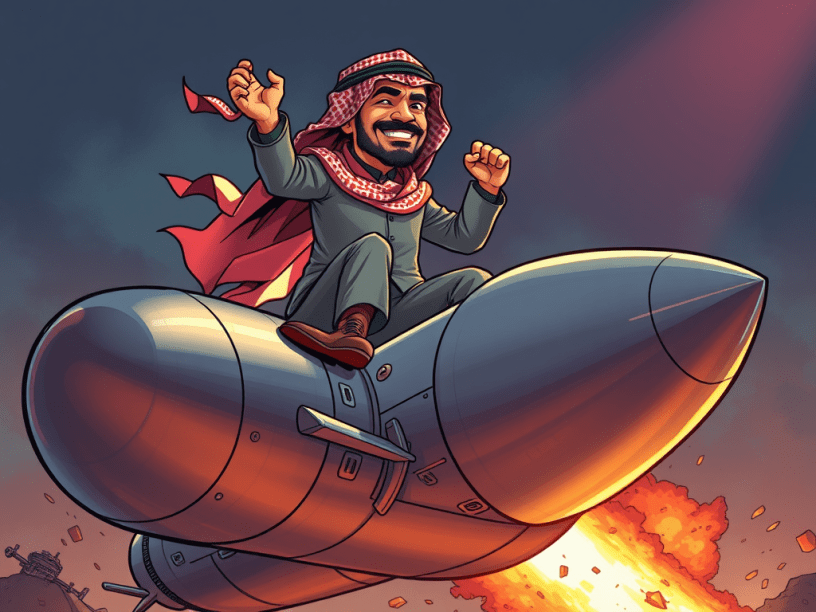
On April 12, American and Iranian negotiators faced off in Oman, mediated by the sultanate’s foreign minister, Badr bin Hamad al-Busaidi, who seemed less like a diplomat and more like the tired referee at a UFC fight. The White House gushed that the talks were “positive and constructive,” which is government-speak for “nobody punched anybody.” Iran’s Foreign Minister Abbas Araghchi claimed they “got very close” to some sort of framework. But let’s not kid ourselves: “very close” in diplomatese means they might agree on the lunch menu by the next decade. So, naturally, they scheduled another round of pointless theatrics on April 19 in Rome.
Fast forward to that second round, and the plot thickens: four hours of talks at the Omani Embassy, more shuttle diplomacy, and a promise to keep the circus going with technical meetings on April 23 and another high-level powwow in Oman on April 26. Progress? Maybe. But this is Iran—a regime that’s been jerking the West around since disco was king. So, what’s the deal with these talks, why’s Iran a global menace, and how do we stop Tehran from turning the Middle East into a glowing wasteland?
The Rome Rumble: April 19’s Diplomatic Dance
Let’s zoom in on the April 19 talks in Rome, because they’re the latest chapter in this nuclear soap opera. Held at the Omani Embassy in Rome’s Camilluccia neighborhood, the U.S. team, led by Trump’s Middle East envoy Steve Witkoff, faced off against Araghchi’s Iranian crew for a four-hour marathon. Like in Oman, the talks were mostly indirect, with Omani mediators ferrying messages between rooms—think high-stakes telephone, but with warheads on the line. Araghchi called the vibe “constructive” and said they made “very good progress” on a framework, with both sides agreeing to task experts to hammer out technical details starting April 23 in Oman. The next big meeting’s set for April 26, also in Oman, to review the eggheads’ work.
Trump, true to form, downplayed the complexity from aboard Air Force One, grumbling that talks were going “pretty good,” but adding, “Nothing matters until you get it done”—classic Trump, treating nuclear diplomacy like a hotel deal in Atlantic City. Meanwhile, Israel’s Benjamin Netanyahu, left in the dark by Trump’s sudden enthusiasm for talking, is practically vibrating with pent-up rage, likely prepping for his own personal airstrike.
What’s actually at stake? America wants Iran to slam the brakes on its nuclear program, which has already pumped uranium enrichment up to 60%—dangerously close to weapons-grade. Iran, meanwhile, has stockpiled enough enriched uranium (18,286 pounds, to be exact) for roughly seven bombs. Tehran demands sanctions relief and an end to Trump’s “maximum pressure” stranglehold, which has cut their oil sales to China down to a trickle. Iran’s made clear their ballistic missiles aren’t up for discussion, and neither is ending their nuclear ambitions. Good luck bridging that diplomatic Grand Canyon.
The catch? Both sides are posturing. Trump’s given Iran until mid-May to shrink its nuclear footprint or face airstrikes, while Iran’s warned that any attack would unleash a regional shitstorm. Washington’s pushing for full disclosure of Iran’s reactor sites and IAEA access, but Tehran’s not biting. Supreme Leader Ayatollah Ali Khamenei, the 85-year-old puppet master, is playing it cautious, warning against “excessive optimism or pessimism” to avoid domestic backlash if talks flop. Meanwhile, Israel’s Benjamin Netanyahu is fuming—Trump’s announcement of talks caught him off-guard, and he’s itching to bomb Iran’s facilities himself.
Iran’s Rap Sheet: A Half-Century of Bad Blood
To get why Iran’s a global migraine, let’s rewind. The U.S. and Iran have been at each other’s throats since the 1979 Islamic Revolution, when students stormed the U.S. Embassy in Tehran, holding 52 Americans hostage for 444 days. The Shah, our buddy, was out; Khamenei’s theocrats were in, chanting “Death to America.” The 1980s brought the Iran-Iraq War, where we backed Saddam Hussein and tangled with Iran in the “Tanker War,” accidentally shooting down an Iranian airliner in 1988, killing 290 civilians. By the 2000s, Iran’s nuclear program was the new flashpoint. In 2002, secret enrichment facilities surfaced, and the West cried “bomb.” Bush slapped Iran in the “Axis of Evil,” while Iran armed Iraqi militias that bled U.S. troops.
Obama’s 2015 Joint Comprehensive Plan of Action (JCPOA) was supposed to cool things off, capping Iran’s nuclear work for sanctions relief. It kinda worked until Trump torched it in 2018, calling it a “horrible” deal. His sanctions crushed Iran’s economy—oil exports dropped 70%—but Tehran retaliated by cranking up enrichment and breaching JCPOA limits. Now, Iran’s got enough fissile material to go nuclear in weeks, per the International Atomic Energy Agency, and they’re not shy about it. Senior officials like Ali Larijani have hinted they’ll build a bomb if cornered.
Beyond nukes, Iran’s the sugar daddy of the “Axis of Resistance”—Hezbollah, Hamas, the Houthis—who’ve been screwing with the West for years. Hezbollah’s got 150,000 rockets aimed at Israel; Hamas’s 2023 attack on Israel sparked a regional firestorm; the Houthis are strangling Red Sea shipping. Iran’s also palling around with Russia and China, supplying drones for Ukraine and holding joint naval drills in March 2025. This isn’t just a Middle East problem; it’s a global power play, with Tehran betting on a new anti-West axis.
Why Iran’s a Threat to World Peace
If Iran goes nuclear, it’s not just Israel’s nightmare—it’s everyone’s. A nuclear-armed Iran would ignite a regional arms race, turning the Middle East into a radioactive mosh pit. Imagine gas prices skyrocketing, global markets tanking, and the Strait of Hormuz—the world’s oil choke-point—closing at Tehran’s whim. It’s a grim picture, made worse by Iran’s missile capabilities and cyber threats that could make the 2012 Aramco hack look quaint.
Iran’s ballistic missiles can hit Israel and U.S. bases, and their cyberwarfare’s no joke—remember the 2012 Aramco hack? Add their Russian and Chinese buddies, and you’ve got a trifecta of trouble. The April 19 talks show Iran’s playing for time, but their enrichment keeps climbing. If they go nuclear, it’s not just Israel’s problem—it’s a global catastrophe.
The West’s Wimp-Out
Why’s the West acting like it’s got stage fright? We’re spread thin—Ukraine, Gaza, China’s Taiwan obsession. Trump’s team is talking tough, but Congress is too busy with culture wars to fund deterrence. Europe’s useless, clinging to the JCPOA’s ashes while Israel’s ready to go rogue. The April 19 talks moved the needle, but Iran’s still calling the shots, refusing to budge on enrichment or missiles. Trump’s threats are loud, but Tehran’s seen this movie—sanctions hurt, but they’ve survived worse. Diplomacy’s been a hamster wheel; Iran uses talks to stall, as they did in 2021.
The real issue? We’re terrified of escalation. Two U.S. carrier groups are in the Middle East, but nobody wants a war that could dwarf Iraq. Iran knows it, exploiting our hesitation while cozying up to Moscow and Beijing. The Rome talks show a glimmer of hope, but without a spine, we’re just delaying the inevitable.
What Do We Do? Get Serious or Get Screwed
Time to stop playing patty-cake. First, tighten the screws. Sanctions aren’t enough—target Iran’s oil exports to China with secondary sanctions and seize their frozen assets. Hit banks like the International Bank of Yemen, which funds the Houthis. Make Khamenei feel the pain so he’s forced to deal.
Second, arm our allies. Israel needs more missile defenses; Gulf states need anti-drone tech. Build a coalition—Israel, UAE, India—to hem Iran in. Third, keep those carriers in the region and run joint exercises to show we’re not bluffing. Fourth, set a hard line in talks. The April 23 technical meetings are key—demand verifiable enrichment caps and IAEA access, or walk away. If Iran stalls by April 26, prep targeted strikes on Natanz and Fordow.
Finally, break Iran’s alliances. Pressure China to cut oil imports with tariffs and expose Russia’s tech transfers at the UN. The Rome talks suggest Iran’s open to limited curbs, but only if we squeeze harder.
The Clock’s Ticking
The April 19 talks in Rome were a step, but don’t kid yourself—Iran’s buying time. Khamenei’s hedging, using diplomacy to dodge strikes while keeping the nuclear option warm. Iran’s history—hostages, proxies, missiles—shows they only respect force. If we don’t act, a nuclear Iran’s not “if” but “when.” The Middle East burns, markets tank, and Tehran’s got the world by the balls. So, ditch the diplomacy charade. Hit their economy, arm our friends, and show some guts. The mullahs think we’re soft. Prove them wrong, or wave goodbye to world peace.
 The American Beast